Masai Village
The Masai people have lots of presence throughout Tanzania. It's believed almost 800,00 Masai live in the country.
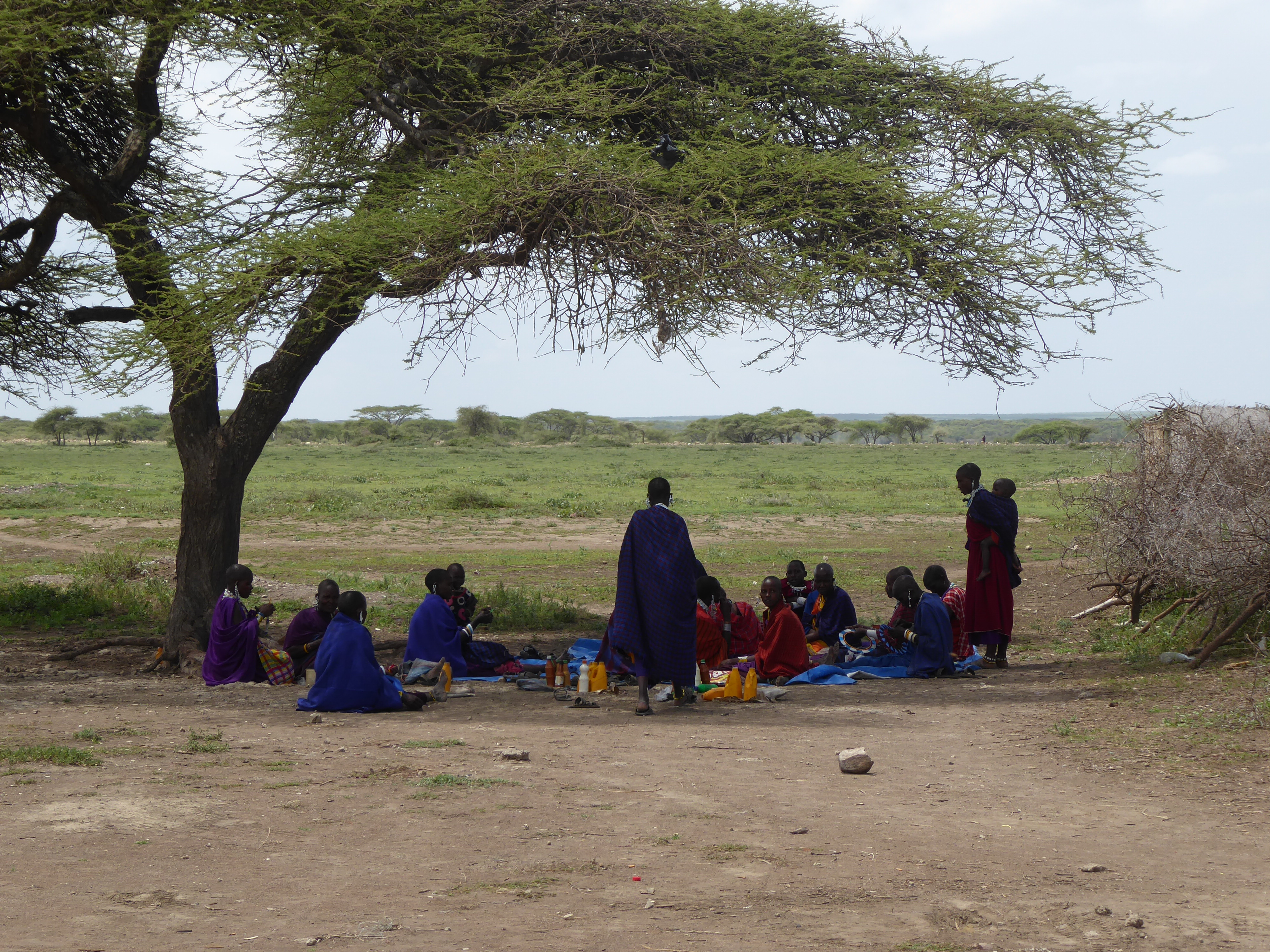
That is not to say they all live in traditional ways. On the way visit to a village, our guide, Ahmed, first took us into the bush for a bit of lunch.
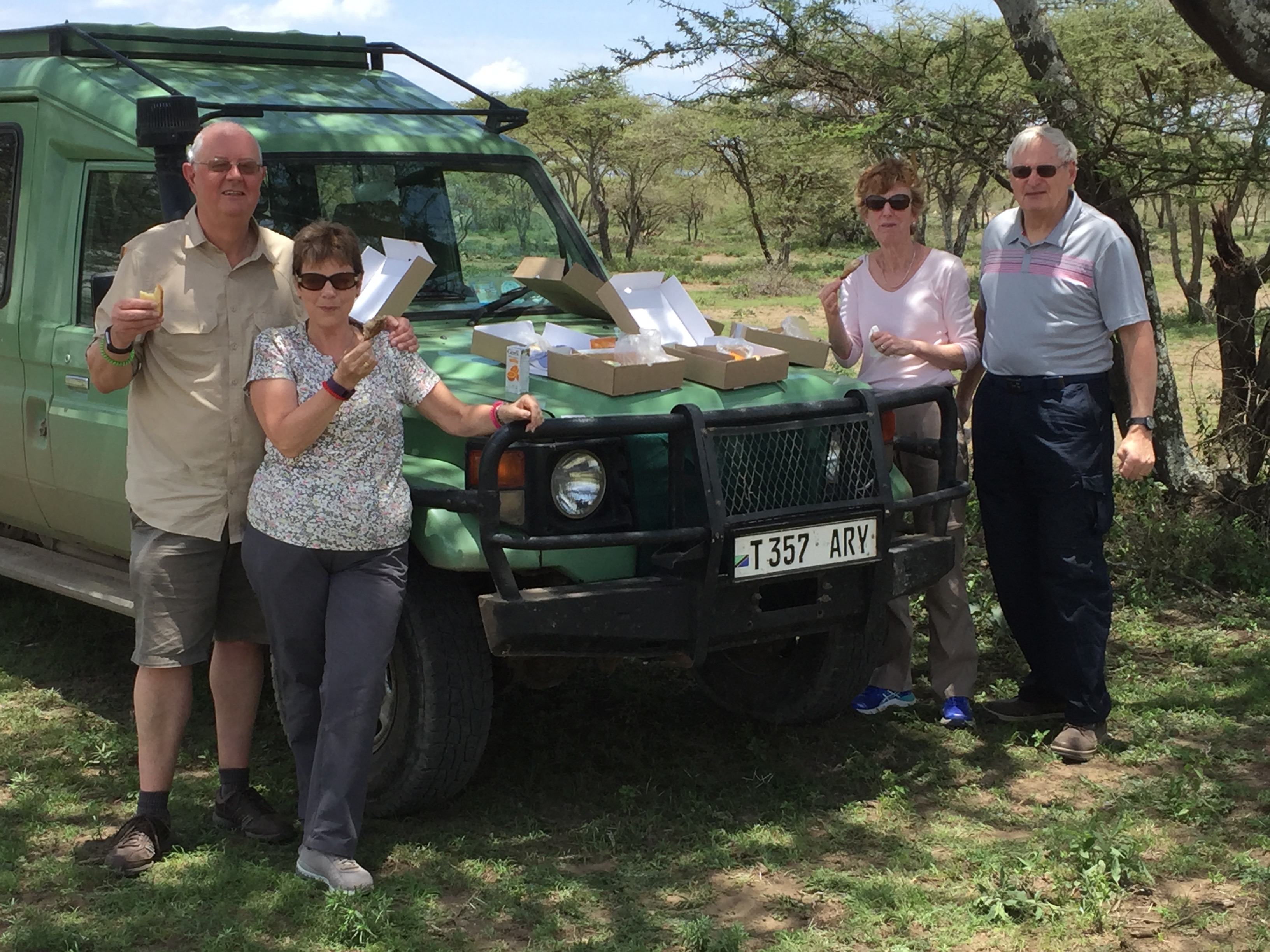 |
Here we are with our safari travel mates, Trevor and Sheila Darrington. We pulled off the road to enjoy a bite. While there, two Masai ladies strolled by with bundles of firewood. Also a couple warriors passed by - with bush knives, spears and all. Our guide gave the ladies some water and food. The warriors did not come close enough to do this. There was no problem or worry - Hakuna Matata - Masai are friendly people. Ahmed instructed us not to take any pictures. Seems the Masai believe when their picture is taken, their soul is taken with it. But read on...... |
|
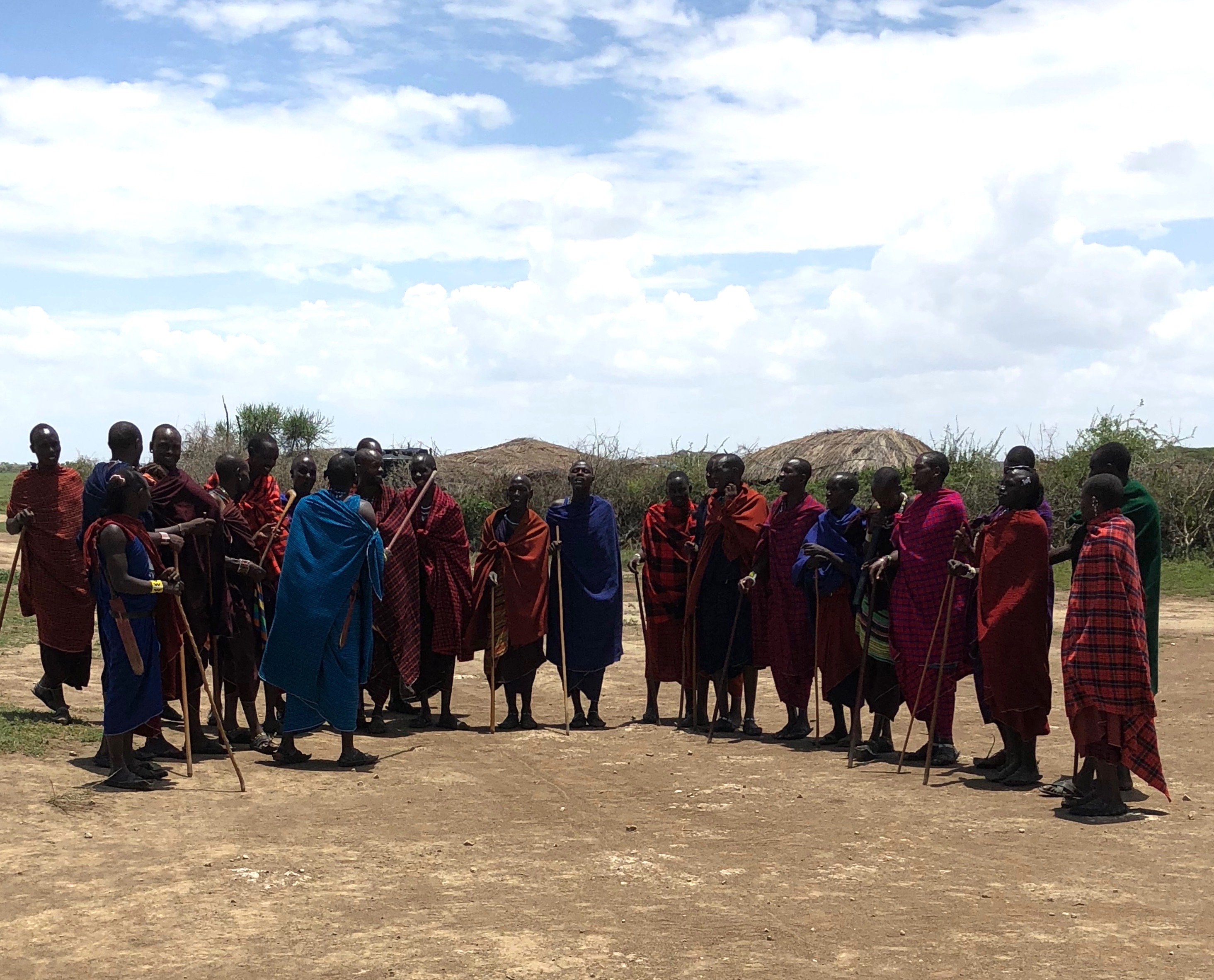
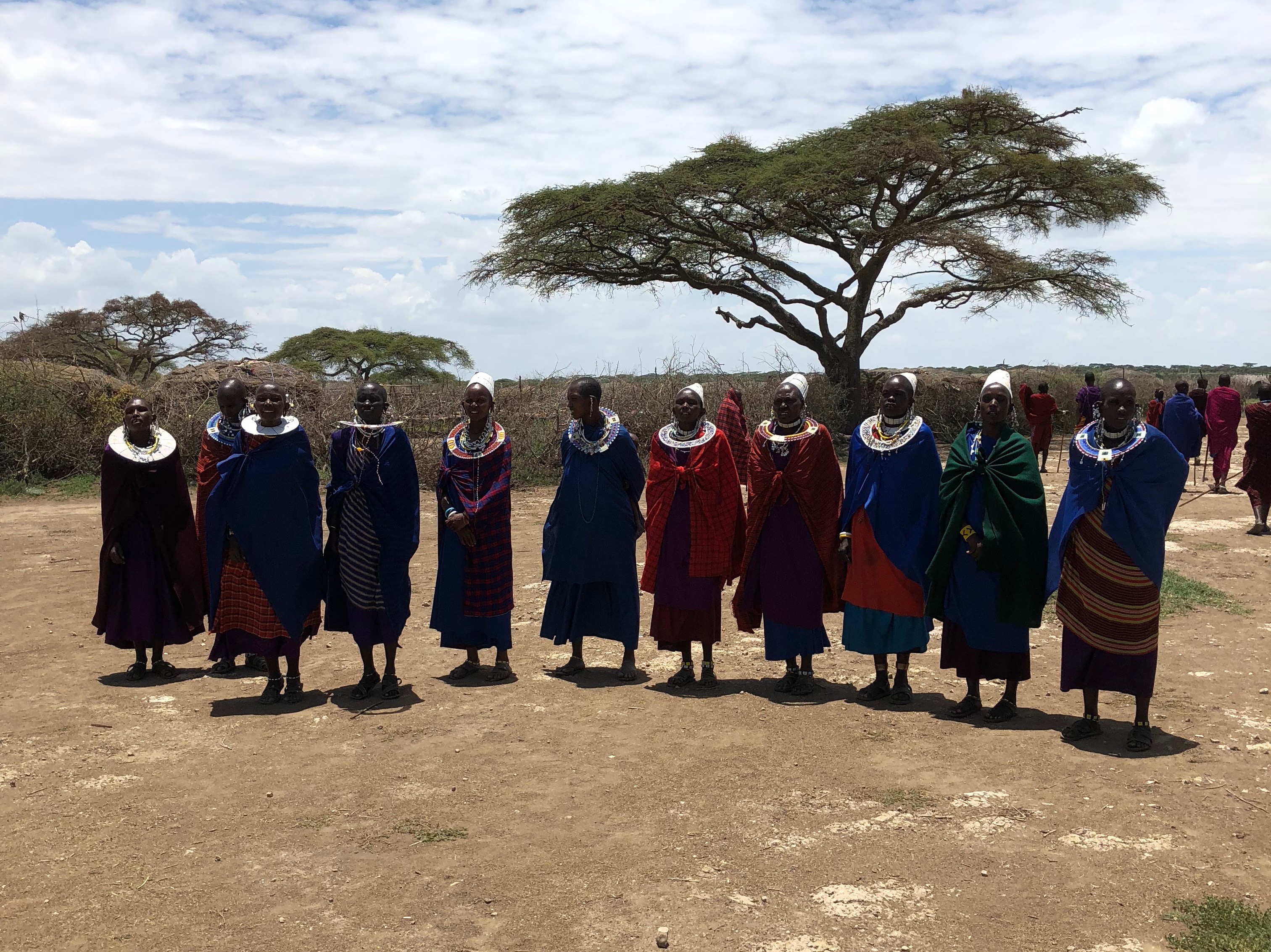
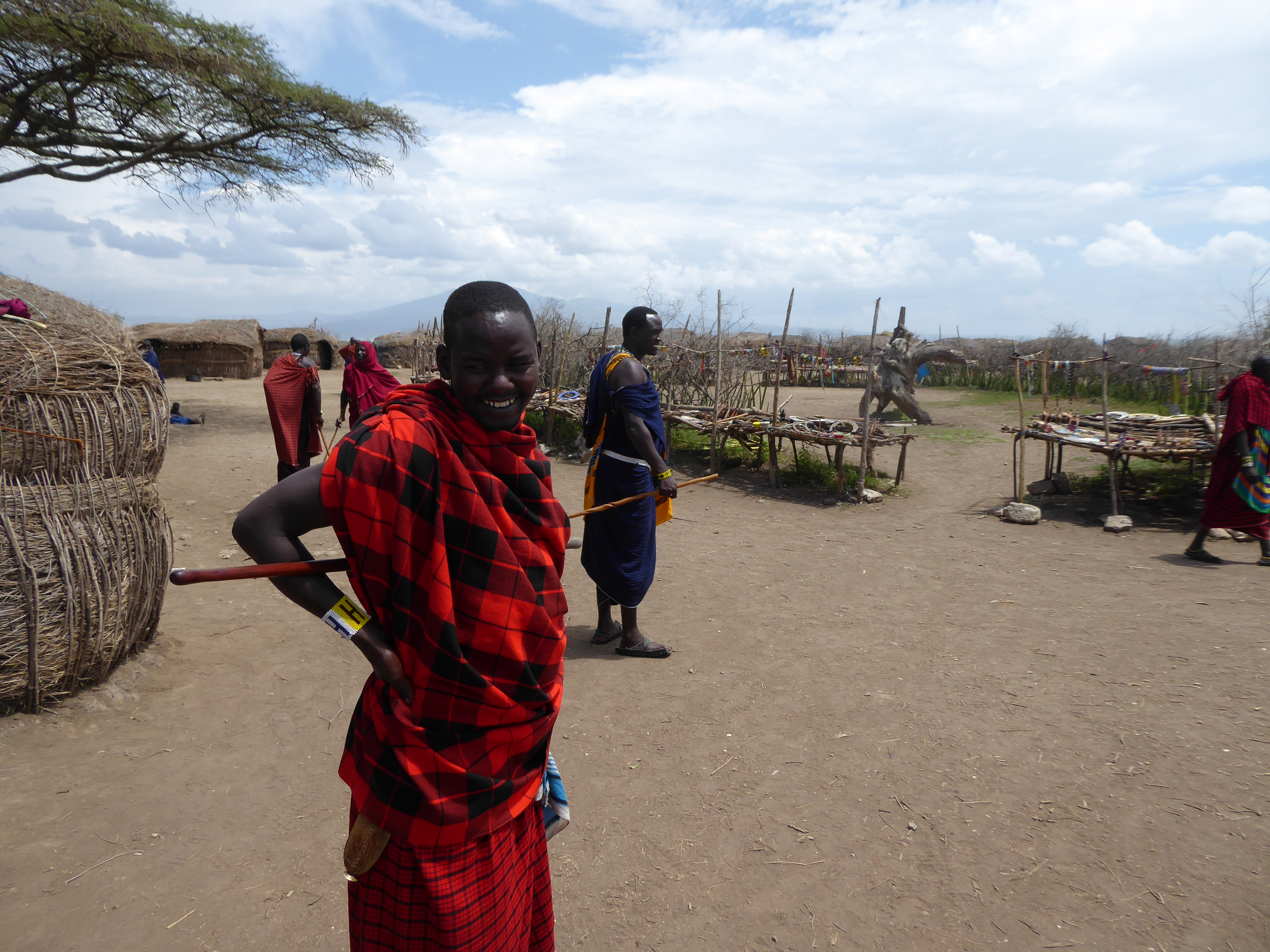
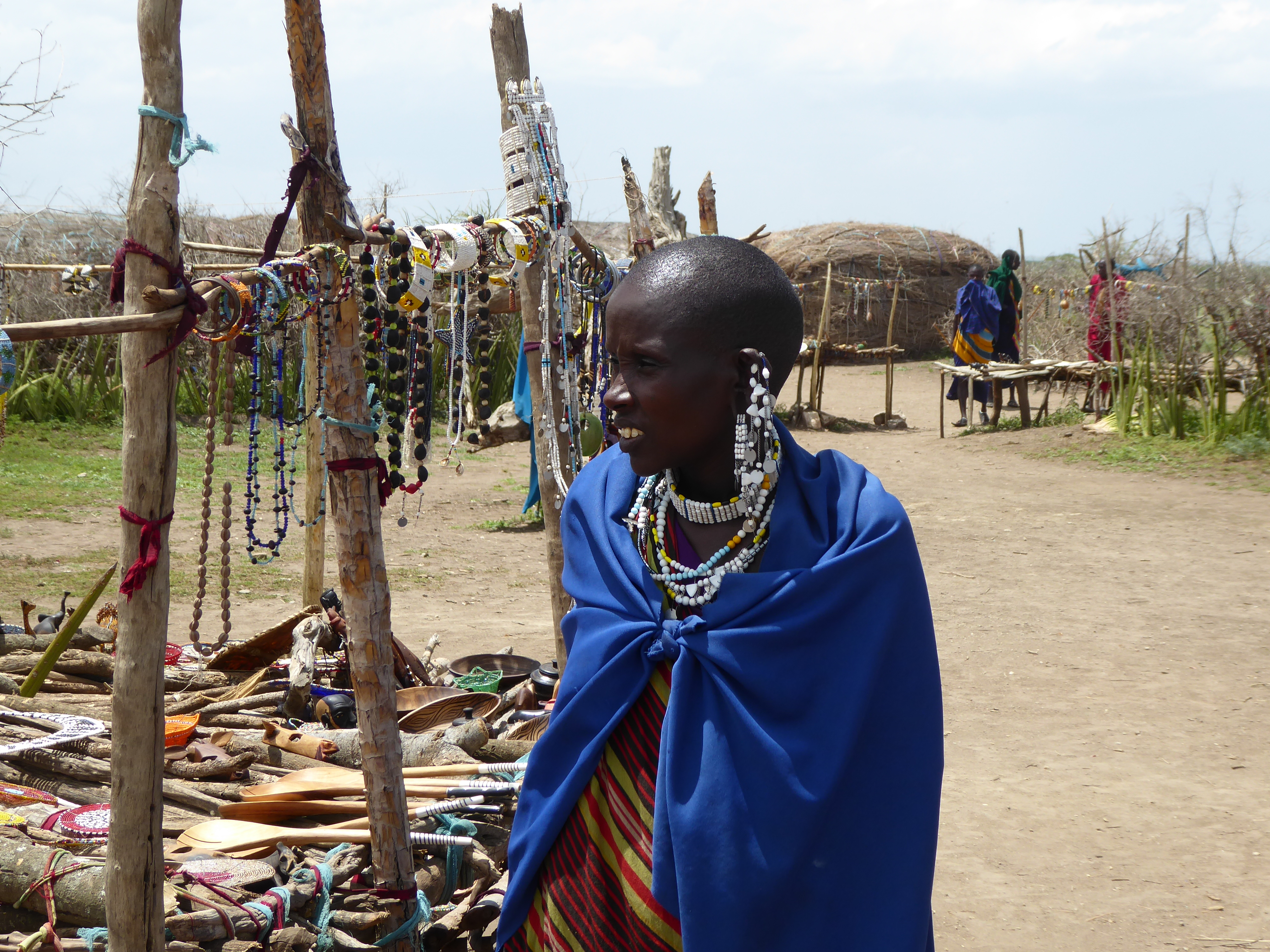
We pulled into a village, of which there are many along the way, and were warmly greeted by the gents in one group, and the ladies in another. As it turns out, for $50.00 for the car load, we can visit the village, AND take all the pictures we want.....commercialism prevails. Each village has one father/elder. The father in this village had 11 wives and 49 children. All in there were about 120 people in residence. |
|
 |
 |
|
Both
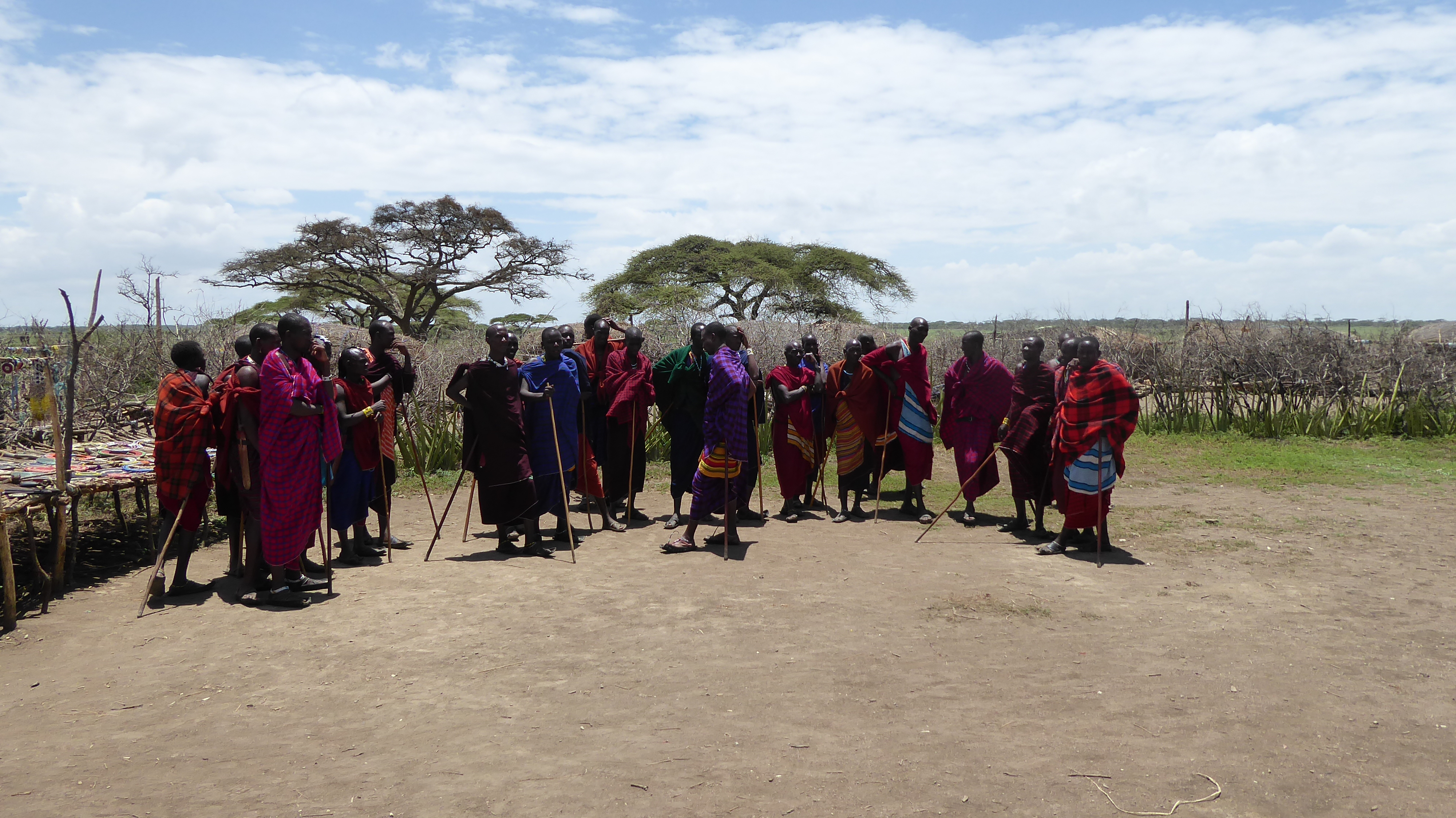
the gents and ladies greeted us and then performed
their traditional welcome dances.
Click here to see the dance video. (Hit
the back button after viewing.)
|
|
| Here is Blakey with our host, Mattia. He is a son of the village father and was very proud to tell us he has three wives, and that each wife costs 10 cows. 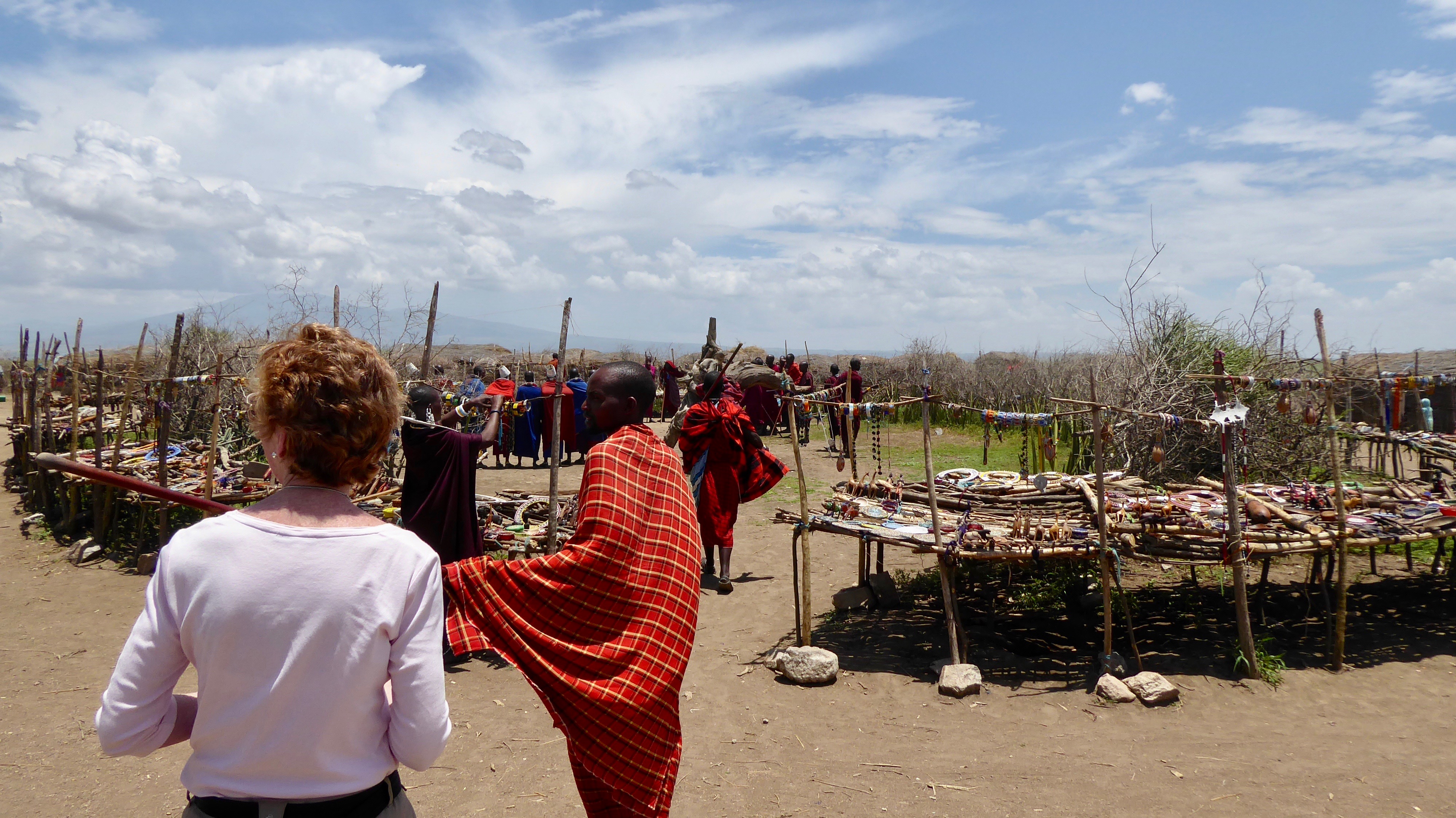 |
Here
the men are again getting prepped for another dance.
 (Hit
the back button after viewing.)
We were invited to join the dance...but passed....would hate to blow out my artificial knee doing a Masai dance. |
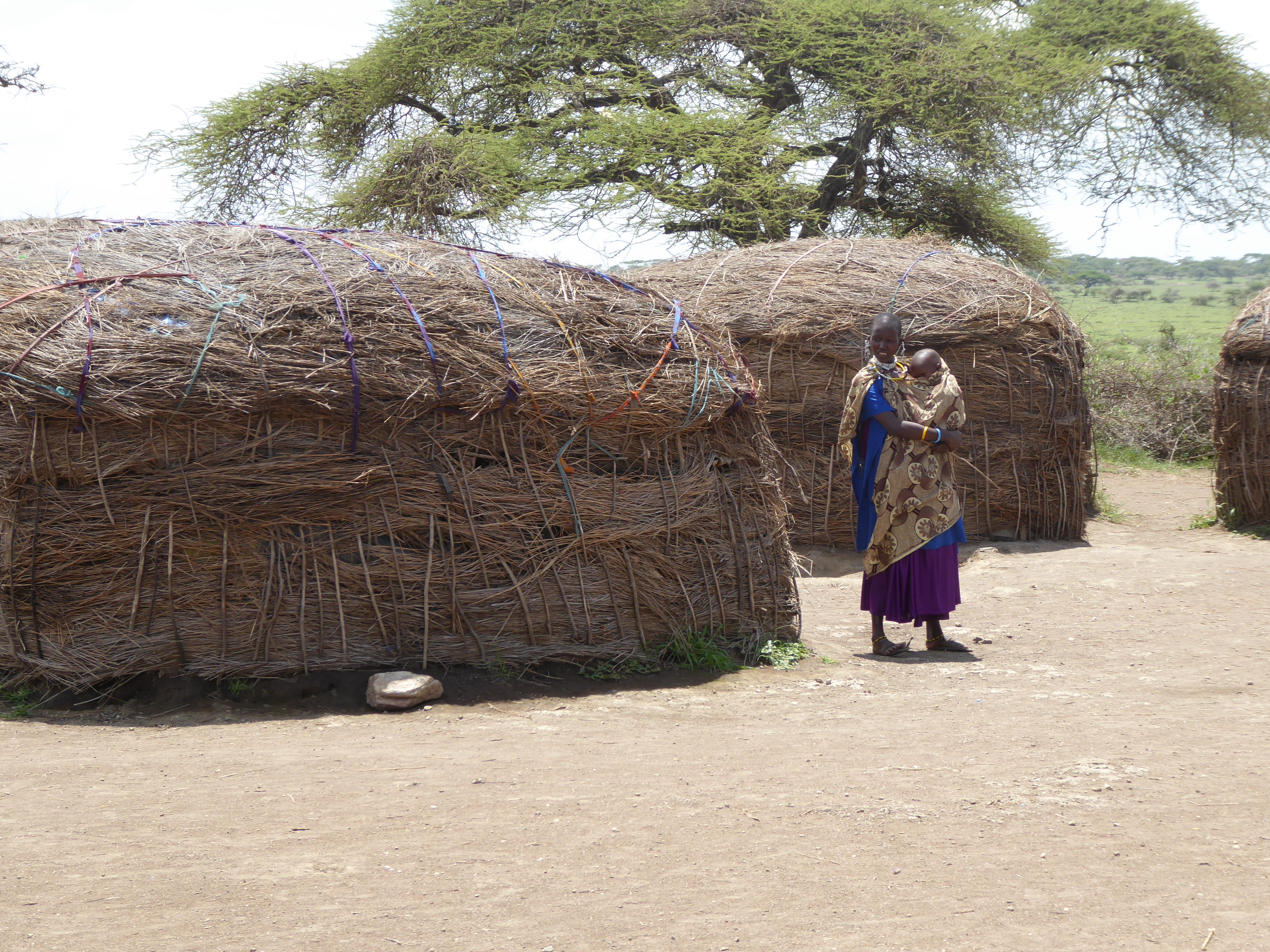
The next order of business was an up front and personal interview with a lad named Leeza. He is also a son of the village father, but has only one wife. He explained that he was working hard to get more cows to get more wives. 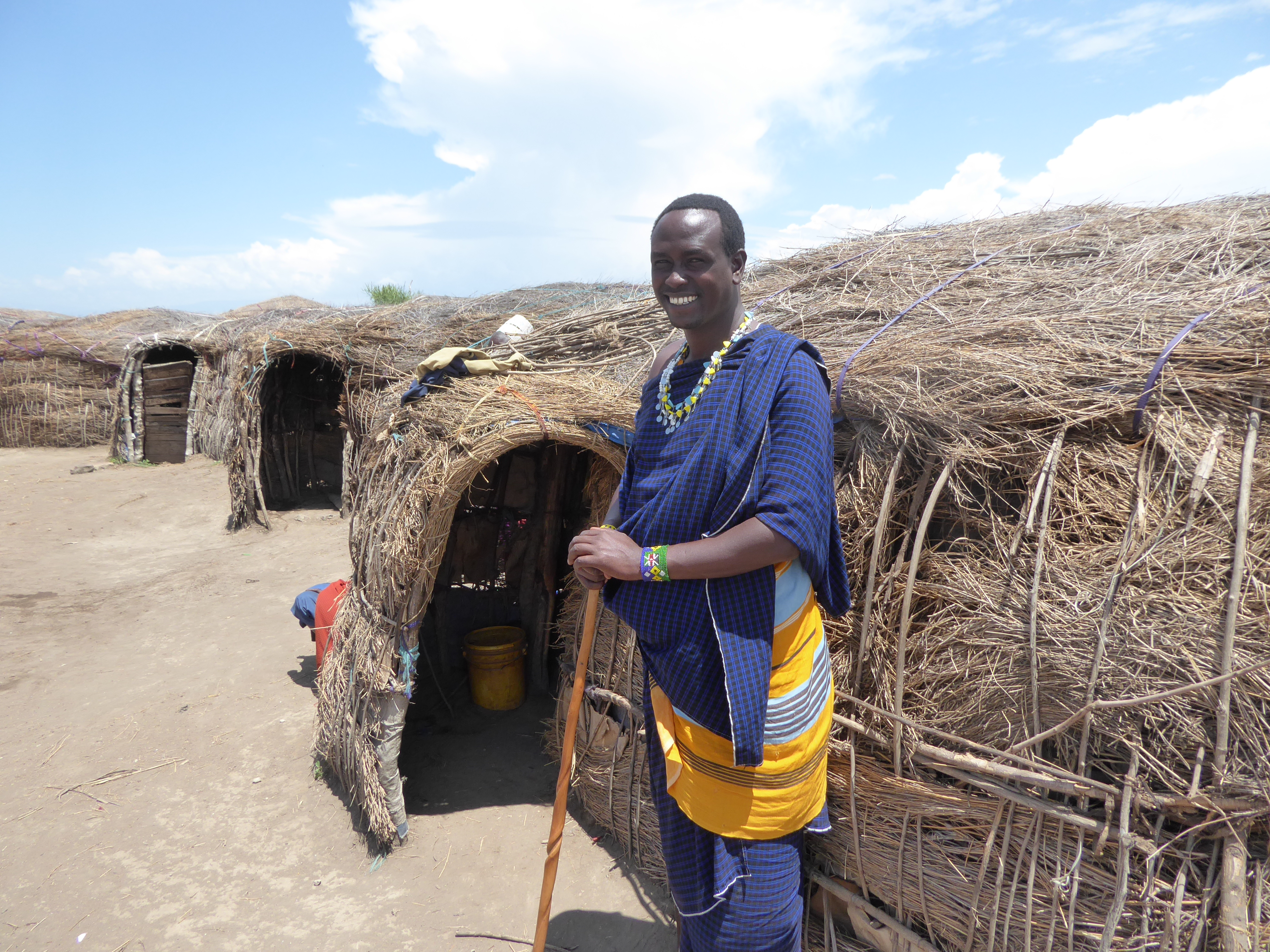 The Masai had been on land well to the east, near Mount Kilimanjaro many years ago. The government determined they needed that land and moved them. The Masai had also been hunters in the Serengeti Plains. Again, the government deemed that land for other use. (Does any of this sound familiar re Native Americans.) They can now live in the Ngorongoro Conservation Area, but NOT in the Serengeti. They are NOT allowed to hunt game, nor farm. They raise cows and goats, and live off their milk and meat. The Masai are nomads and move when water, grass and other resources run out. They had been in this village about 5 months and expect to move soon. They do not take the village with them - it is simply abandoned and a new one built, wherever they go to next. On our travels we saw Masai people with cell phones and expensive wrist watches. And many of the children will got to boarding schools in cities. Clearly they make a choice to live a traditional life, and this is supported (in a way) by the government. |
We were invited into his hut for a more in depth chat and for him to tell us about Masai life. 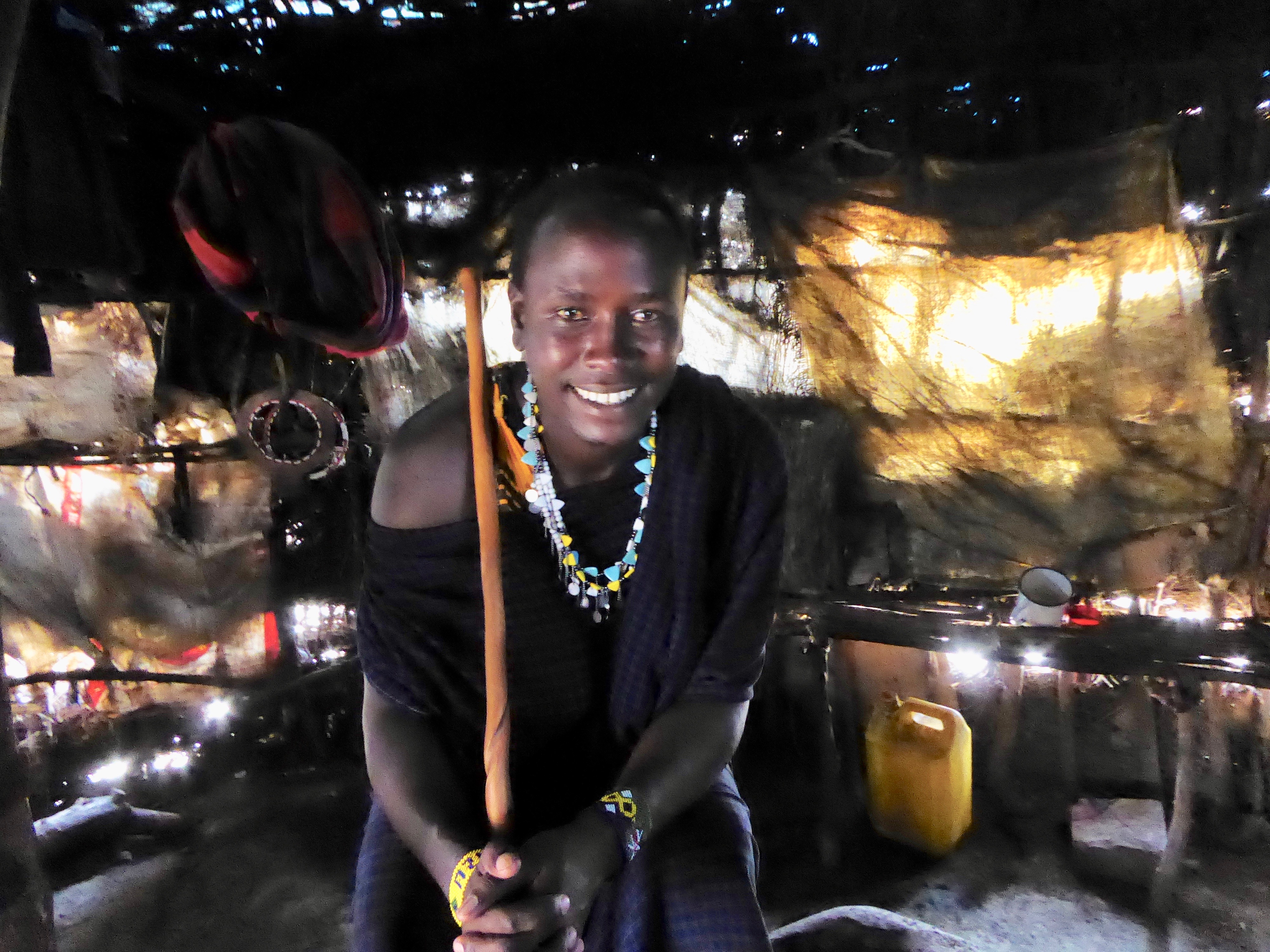 Leeza'a hut was spartan to say the least. We sat on a bunk for his children, to the right and behind a corner is the bunk for and his Mrs. Cooking is done in a small fire pit on the floor. However, the men eat at butcher's spot some half kilometer away. The women cook for themselves and their children and eat in the hut. 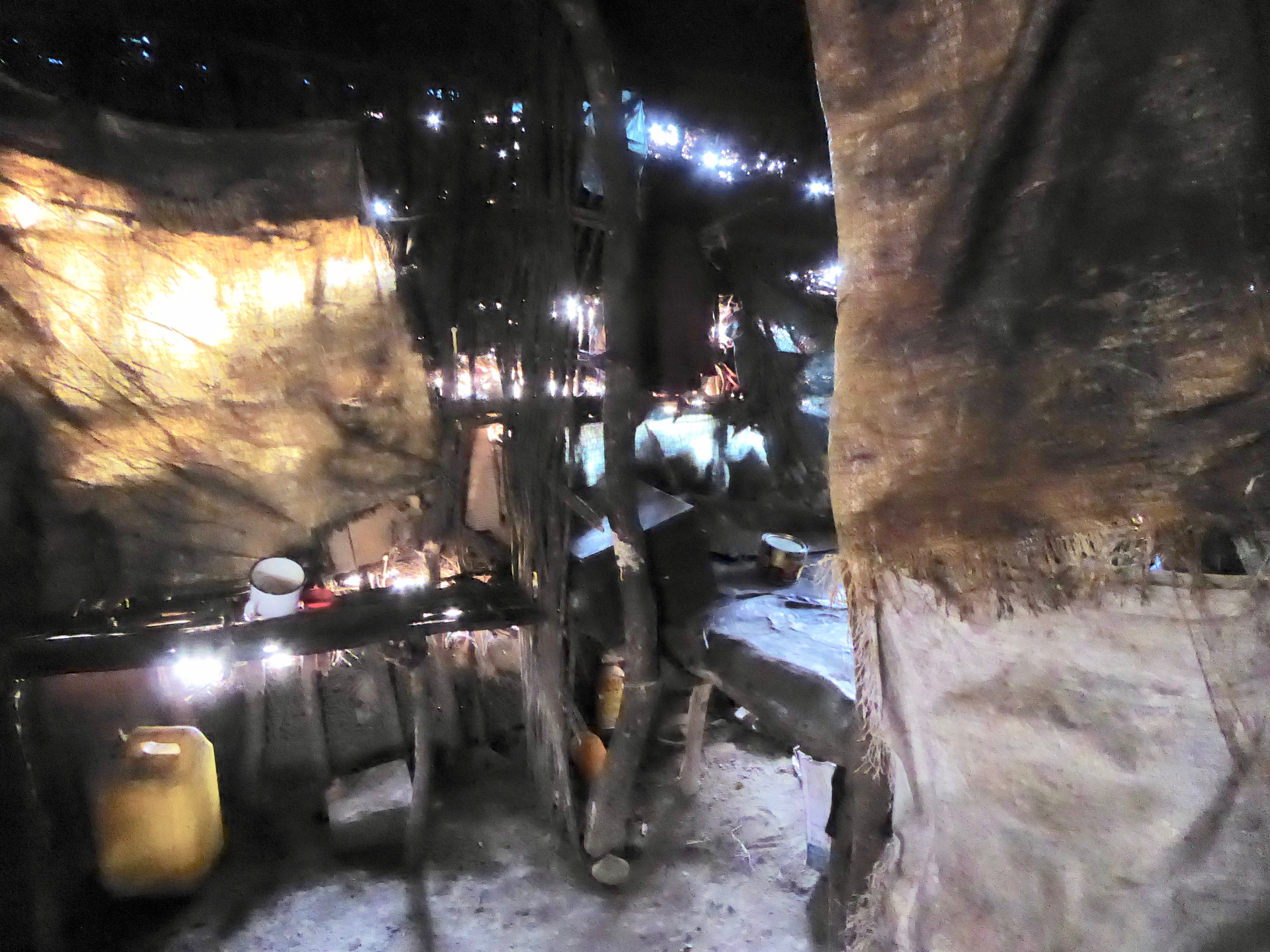 Boys go through a ritual at about age 14 or 15 to become Masai warriors - rights of manhood. A ceremony is held wherein the boys are circumcised. The boys must not show any pain for as long as possible. The longer they can sit perfectly still, the braver they are, and the more gifts they get, e.g. goats. Leeza was very proud that he was able to not move for 20 minutes. After this ceremony, the prospective new warriors round up some live stock and must leave the village for six months to live on their own, albeit as a group. |
The village school building. Very scenic background. 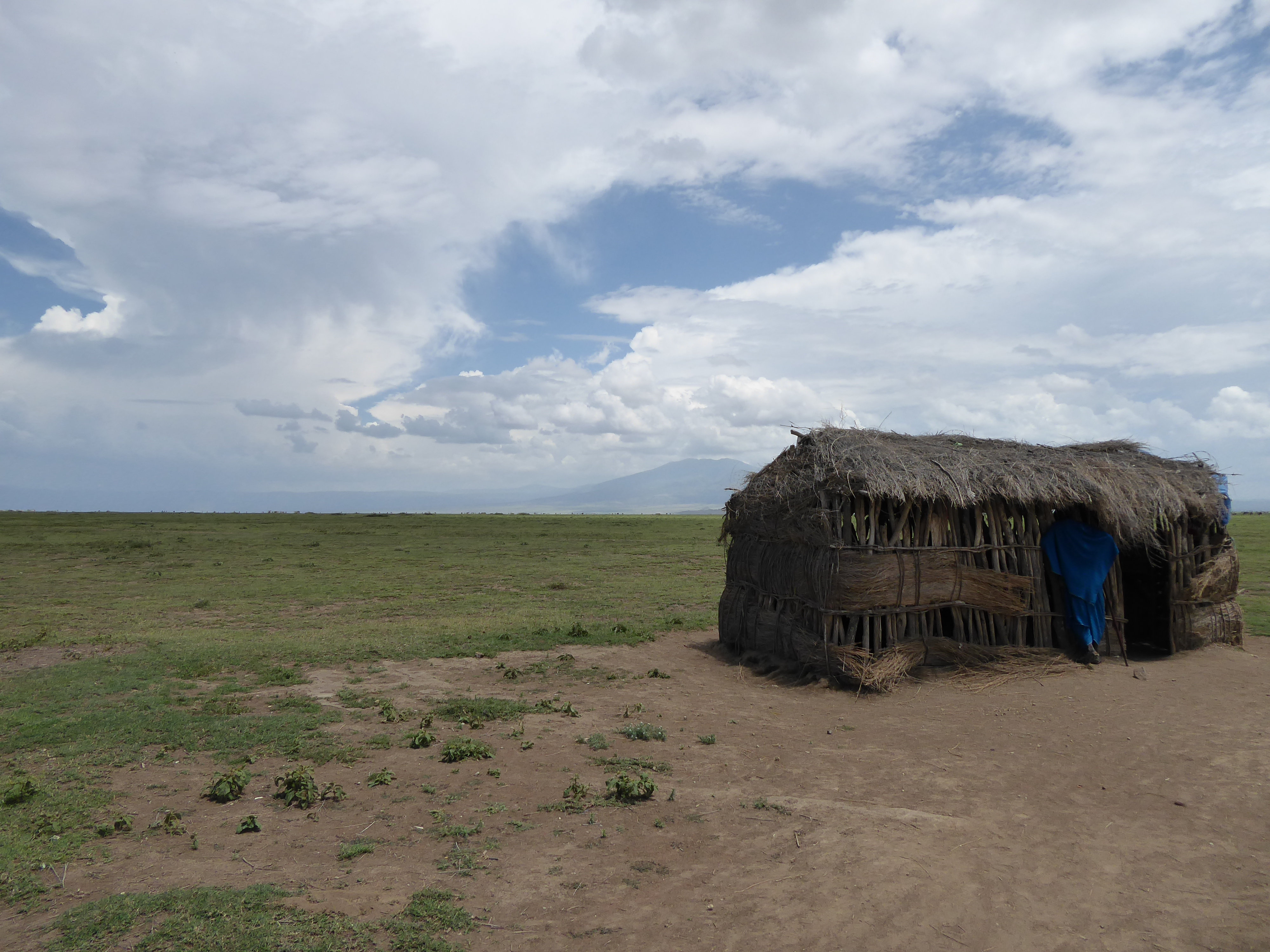 |
Future graduates. The students have no books, pencils, papers or any educational material. The teacher has one chalk board and chalk. 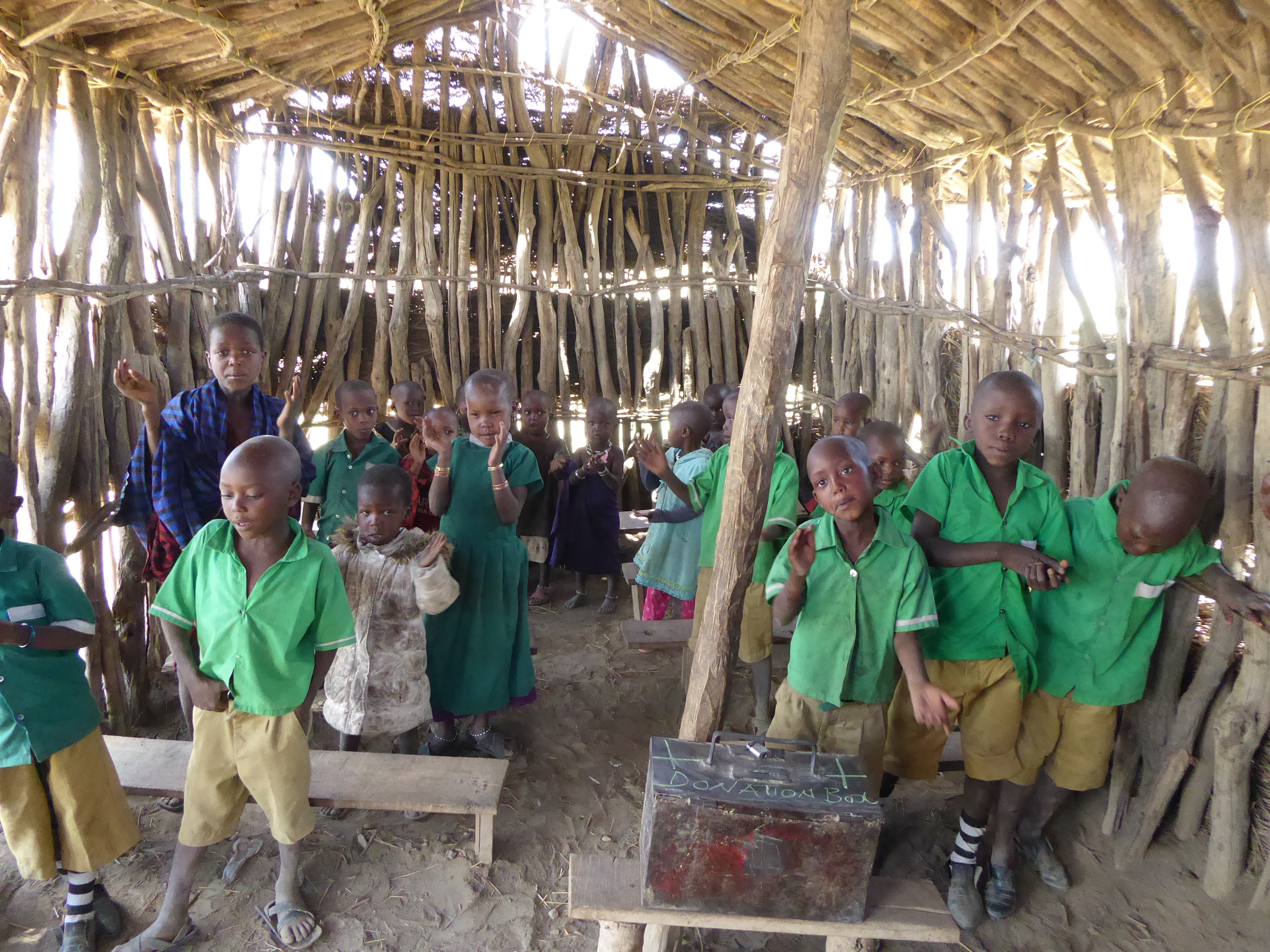 |
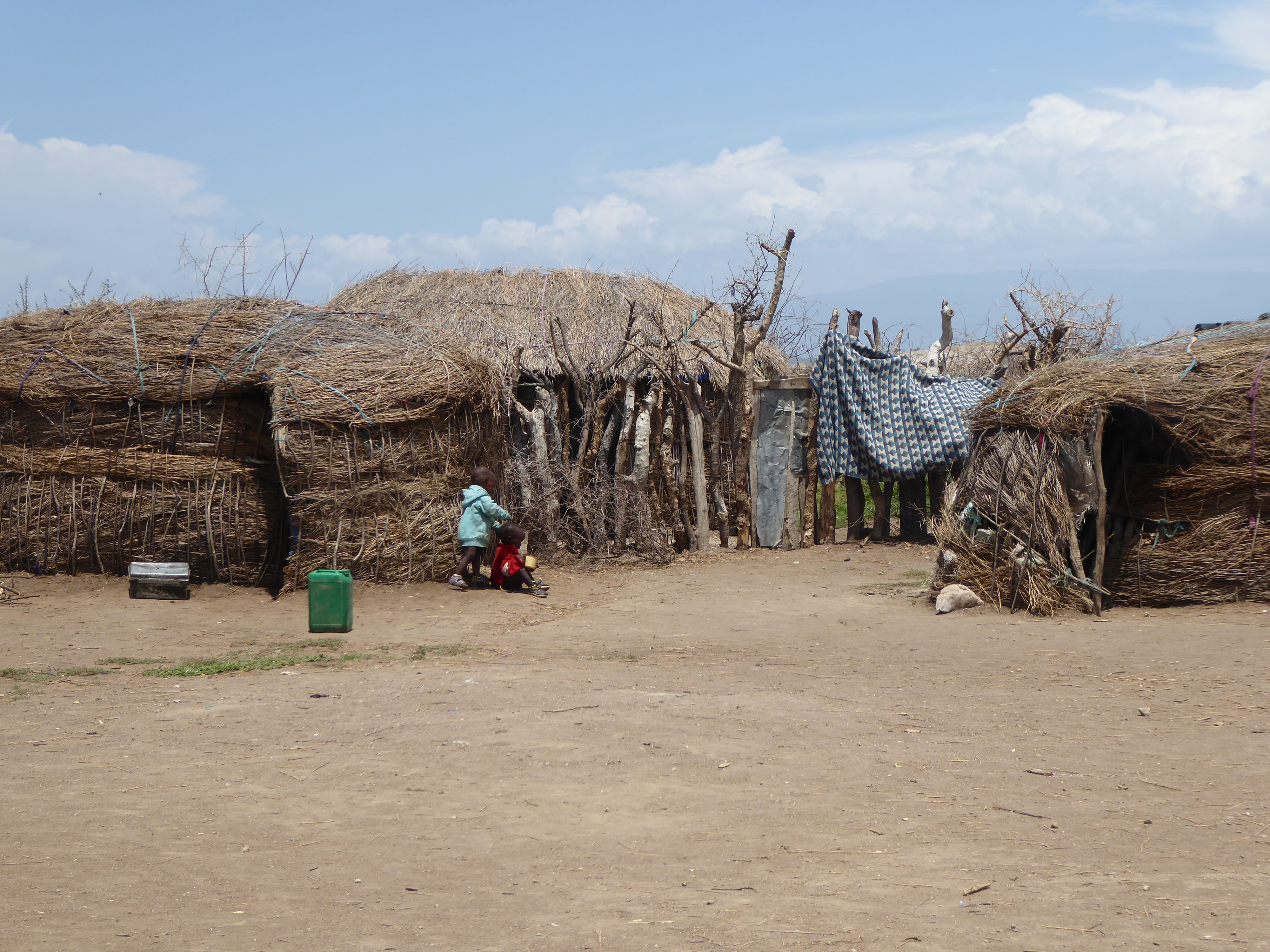
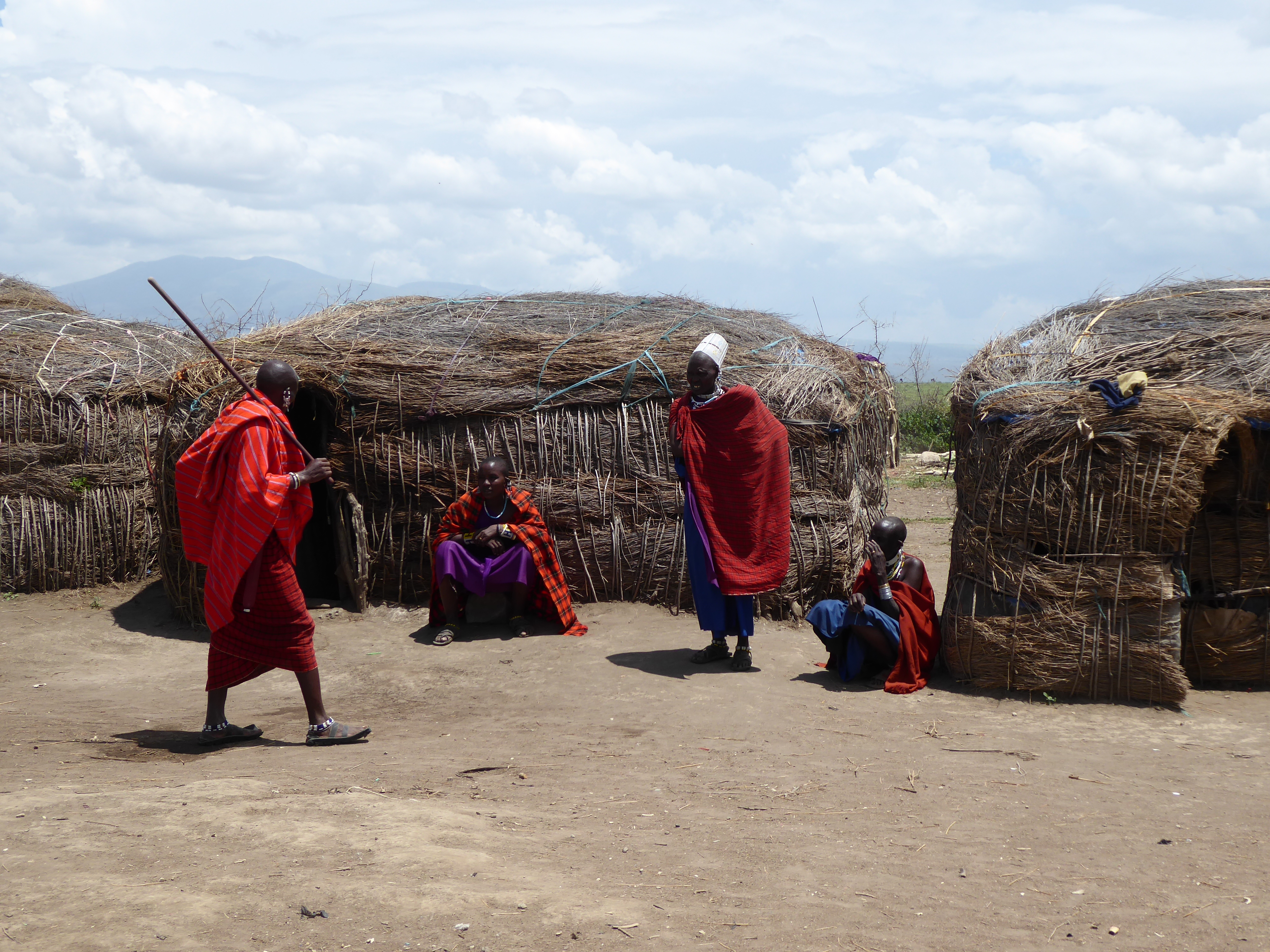
Village life... |
|
   |
   |